Sunday, 25 December 2011

How to Patent and Idea

Patent Protection for a Product Ideas or Inventions What is a patent?

A patent permits the owner of the patent to prevent anyone else from producing the product or using the process covered by the patent.

A provisional patent application is a step toward obtaining a utility patent, where the invention might not yet be ready to obtain a utility patent. In other words, if it seems as though the invention cannot yet obtain a utility patent, the provisional application may be filed in the Patent Office to establish the inventor's priority to the invention.As the inventor continues to develop the invention and make further developments which allow a utility patent to be obtained, then the inventor can "convert" the provisional application to a full utility application.

A provisional patent has several benefits:

A) Patent Pending Status: The most well-known benefit of a Provisional Patent Application is that it allows the inventor to immediately begin marking the product "patent pending."

C) Establishment of a filing date: The provisional patent application also provides the inventor with a crucial "filing date." In other words, the date that the provisional is filed becomes the invention's filing date, even for the later filed/converted utility patent.

Requirements for obtaining a utility patent

A) Novelty: To obtain a utility patent, you must initially determine whether your invention is "novel". In rejecting your patent application, the Patent Office would actually cite the Edison light bulb patent against you as relevant "prior art" (prior art is everything "known" prior to your conception of the invention or everything known to the public more than one year before you file a patent application for the invention).

What is considered prior art by the Patent Office?

Section 102(a) of the patent law specifically describes the things which can be used as prior art if they occur before your date of invention:

1) Public knowledge in the United States: Any evidence that your invention was "known" by others, in the United States, prior to your date of invention. Even if there is no patent or written documentation showing that your invention was known in the United States, the PTO may still reject your patent application under section 102(a) as lacking novelty if they can show that your invention was generally known to the public prior to your date of invention.

2) Public use in the United States: Use by others of the invention you are attempting to patent in public in the United States, prior to your date of invention, can be held against your patent application by the PTO.

3) Patented in the United States or abroad: Any United States or foreign patents which issued prior to your date of invention and which disclose your invention will be used against your patent application by the PTO.

1) Commercial activity in the United States: If the invention you wish to patent was sold or offered for sale in the United States more than one year before you file a patent application, then you are "barred" from ever obtaining a patent on your invention.

2) Public use in the United States: If the invention you wish to patent was used in the United States by you or another more than one year before your filing of a patent application, then you are "barred" from ever obtaining a patent on your invention.

4) Patented in the United States or abroad: If a United States or foreign patent covering your invention issued over a year prior to your filing date, you will be barred from obtaining a patent. Compare this with the previous section regarding United States and foreign patents which states that, under 102(a) of the patent law, you are prohibited from getting a patent if the filing date of another patent is earlier than your date of invention. Under 102(b) which we are discussing here, you cannot get a patent on an invention which was disclosed in another patent issued over a year ago, even if your date of invention was before the filing date of that patent.

It is significantly cheaper than a non-provisional patent and provides the inventor with a 12–month period in which to market and/or develop their invention (while using the term “patent pending”) before they need to invest in a “full” non-provisional patent.; The provisional patent does not require the patent claims, which are a key element of the non-provisional application.; Additionally, a provisional application is not examined by the USPTO and does not convert to a regular patent.; The inventor must submit the non-provisional application within one year of the provisional filing date; otherwise, they would not be able to use the original filing date of the provisional application.


A provisional patent application should include the following elements, which are significantly scaled back from the non-provisional application:;

  • Description of invention – invention claims are not required, just an adequate description of the invention

  • Drawing – if necessary to understand the invention
  • Thursday, 22 December 2011

    Patent Infringement - Who Can Be Sued?

    Patent Protection for a Product Ideas or Inventions What is a patent?

    A patent permits the owner of the patent to prevent anyone else from producing the product or using the process covered by the patent. Think of Thomas Edison and his most famous patented invention, the light bulb.

    A provisional patent application is a step toward obtaining a utility patent, where the invention might not yet be ready to obtain a utility patent. In other words, if it seems as though the invention cannot yet obtain a utility patent, the provisional application may be filed in the Patent Office to establish the inventor's priority to the invention.As the inventor continues to develop the invention and make further developments which allow a utility patent to be obtained, then the inventor can "convert" the provisional application to a full utility application.

    A provisional patent has several benefits:

    A) Patent Pending Status: The most well-known benefit of a Provisional Patent Application is that it allows the inventor to immediately begin marking the product "patent pending."

    C) Establishment of a filing date: The provisional patent application also provides the inventor with a crucial "filing date." In other words, the date that the provisional is filed becomes the invention's filing date, even for the later filed/converted utility patent.

    Requirements for obtaining a utility patent

    A) Novelty: To obtain a utility patent, you must initially determine whether your invention is "novel". For example, if you were to apply for a patent on the light bulb, it seems quite clear that you would not be entitled to a patent, since the light bulb is not a new invention. In rejecting your patent application, the Patent Office would actually cite the Edison light bulb patent against you as relevant "prior art" (prior art is everything "known" prior to your conception of the invention or everything known to the public more than one year before you file a patent application for the invention).

    What is considered prior art by the Patent Office?

    A) Prior art which dates back prior to your date of invention: It would seem to make sense that if prior art exists which dates before your date of invention, you should not be entitled to obtain a patent on that invention since you would not truly be the first inventor. Section 102(a) of the patent law specifically describes the things which can be used as prior art if they occur before your date of invention:

    1) Public knowledge in the United States: Any evidence that your invention was "known" by others, in the United States, prior to your date of invention. Even if there is no patent or written documentation showing that your invention was known in the United States, the PTO may still reject your patent application under section 102(a) as lacking novelty if they can show that your invention was generally known to the public prior to your date of invention.

    2) Public use in the United States: Use by others of the invention you are attempting to patent in public in the United States, prior to your date of invention, can be held against your patent application by the PTO.

    3) Patented in the United States or abroad: Any United States or foreign patents which issued prior to your date of invention and which disclose your invention will be used against your patent application by the PTO.

    1) Commercial activity in the United States: If the invention you wish to patent was sold or offered for sale in the United States more than one year before you file a patent application, then you are "barred" from ever obtaining a patent on your invention.

    2) Public use in the United States: If the invention you wish to patent was used in the United States by you or another more than one year before your filing of a patent application, then you are "barred" from ever obtaining a patent on your invention.

    4) Patented in the United States or abroad: If a United States or foreign patent covering your invention issued over a year prior to your filing date, you will be barred from obtaining a patent. Compare this with the previous section regarding United States and foreign patents which states that, under 102(a) of the patent law, you are prohibited from getting a patent if the filing date of another patent is earlier than your date of invention. Under 102(b) which we are discussing here, you cannot get a patent on an invention which was disclosed in another patent issued over a year ago, even if your date of invention was before the filing date of that patent.

    Patent Protection for a Product Ideas or Inventions


    One of the questions that patent holders may have is "who can be sued in a patent infringement lawsuit?" If a company makes a new product that infringes upon an existing and in force patent, it is infringing upon that patent and can be sued. If you believe that your patent rights are being infringed upon, contact a patent infringement lawyer for a consultation to evaluate your case for a lawsuit.

    Monday, 19 December 2011

    If you are not prepared to file a patent application

    Patent Protection for a Product Ideas or Inventions What is a patent?

    A patent permits the owner of the patent to prevent anyone else from producing the product or using the process covered by the patent. Think of Thomas Edison and his most famous patented invention, the light bulb.

    A provisional patent application is a step toward obtaining a utility patent, where the invention might not yet be ready to obtain a utility patent. In other words, if it seems as though the invention cannot yet obtain a utility patent, the provisional application may be filed in the Patent Office to establish the inventor's priority to the invention.As the inventor continues to develop the invention and make further developments which allow a utility patent to be obtained, then the inventor can "convert" the provisional application to a full utility application.

    A provisional patent has several benefits:

    A) Patent Pending Status: The most well-known benefit of a Provisional Patent Application is that it allows the inventor to immediately begin marking the product "patent pending."

    C) Establishment of a filing date: The provisional patent application also provides the inventor with a crucial "filing date." In other words, the date that the provisional is filed becomes the invention's filing date, even for the later filed/converted utility patent.

    Requirements for obtaining a utility patent

    A) Novelty: To obtain a utility patent, you must initially determine whether your invention is "novel". In rejecting your patent application, the Patent Office would actually cite the Edison light bulb patent against you as relevant "prior art" (prior art is everything "known" prior to your conception of the invention or everything known to the public more than one year before you file a patent application for the invention).

    Any trivial physical difference will suffice to render your invention novel over a similar invention.If you were to invent a square light bulb, your invention would actually be novel compared to the Edison light bulb (since his was round/elliptical). What is considered prior art by the Patent Office?

    A) Prior art which dates back prior to your date of invention: It would seem to make sense that if prior art exists which dates before your date of invention, you should not be entitled to obtain a patent on that invention since you would not truly be the first inventor. Section 102(a) of the patent law specifically describes the things which can be used as prior art if they occur before your date of invention:

    1) Public knowledge in the United States: Any evidence that your invention was "known" by others, in the United States, prior to your date of invention. Even if there is no patent or written documentation showing that your invention was known in the United States, the PTO may still reject your patent application under section 102(a) as lacking novelty if they can show that your invention was generally known to the public prior to your date of invention.

    2) Public use in the United States: Use by others of the invention you are attempting to patent in public in the United States, prior to your date of invention, can be held against your patent application by the PTO.

    3) Patented in the United States or abroad: Any United States or foreign patents which issued prior to your date of invention and which disclose your invention will be used against your patent application by the PTO.

    1) Commercial activity in the United States: If the invention you wish to patent was sold or offered for sale in the United States more than one year before you file a patent application, then you are "barred" from ever obtaining a patent on your invention.

    2) Public use in the United States: If the invention you wish to patent was used in the United States by you or another more than one year before your filing of a patent application, then you are "barred" from ever obtaining a patent on your invention.

    4) Patented in the United States or abroad: If a United States or foreign patent covering your invention issued over a year prior to your filing date, you will be barred from obtaining a patent. Compare this with the previous section regarding United States and foreign patents which states that, under 102(a) of the patent law, you are prohibited from getting a patent if the filing date of another patent is earlier than your date of invention. Under 102(b) which we are discussing here, you cannot get a patent on an invention which was disclosed in another patent issued over a year ago, even if your date of invention was before the filing date of that patent.

    Now what?Many will tell you if it's worth anything, you must patent your invention. Should you file a patent yourself? to.gov ) Is your invention really an invention? Your invention has to do something. The U.S. gives patent rights to the first inventor. But even this has its limits if the invention is publically disclosed.

    Saturday, 17 December 2011

    Obtaining a Provisional Patent

    A provisional patent application is not a patent, and furthermore, never becomes a patent, with the single rare exception noted below.

    For more information on provisional patent applications, see .

    Non-provisional

    A non-provisional patent application, sometimes called a "regular" patent application or just a "patent application", is a "real" application for a patent.

    For more information on non-provisional patent applications, see .

    Many people think that a provisional patent application is less costly way to get a patent than a non-provisional patent application. Alternately, if they do not find someone, they plan to let the provisional patent application expire without filing a non-provisional patent application and incur no further expenses.

    Provisional or Non-provisional Patent Application - Which Should You Choose?


    A provisional patent is somewhat like obtaining a placeholder patent. The provisional patent is an initial patent, that is similar to a regular patent and is subject to most patent infringement laws, but it will not turn into a typical patent with all the patent rights until the applicant takes additional steps. The U.S. Patent Office has high regulations regarding provisional patents and won't hand over a provisional patent unless it meets U.S. Patent Office requirements. Patent lawyers recommend filing for a provisional patent first in many cases if the patent desired has a high likelihood of becoming someone else's very good idea. The U.S. Patent Office generally only permits provisional patents for a short time before the provisional patent holder is then required to take additional steps to obtain a regular patent. If the provisional patent holder fails to do so, then the next applicant if free to file for a patent without violating patent infringement laws.A patent lawyer can thoroughly explain all the details between a provisional patent and a regular patent. A patent lawyer can also determine whether a patent applicant is better served filing for a provisional patent first. Exceptions to patent infringement law would create patent pandemonium, which would be highly chaotic for inventors and potential patent holders.

    Tuesday, 13 December 2011

    United Kingdom: Theory Into Action: Calculating Damages Payments and Accounts of Profits in Patent Instances

    Provisional or Non-provisional Patent Application - Which Should You Choose?

    A provisional patent application is not a patent, and furthermore, never becomes a patent, with the single rare exception noted below.

    While patent attorneys often speak of "converting" a provisional into a non-provisional, this is not usually an accurate description of the case (with a single exception), since the provisional has no life beyond its twelve-month term and "converting" is usually done by filing a non-provisional application that claims benefit of the filing date of the provisional. Thus, the provisional is primarily a means for delaying the filing of a non-provisional patent application, while still getting benefit of the earlier filing date of the provisional.

    Lastly, a provisional patent application never sees the light of day and remains confidential, unless a non-provisional patent application (or a Patent Cooperation Treaty application -- to preserve foreign filing rights -- or a design application) takes priority to it.

    For more information on provisional patent applications, see .

    Non-provisional

    A non-provisional patent application, sometimes called a "regular" patent application or just a "patent application", is a "real" application for a patent. Claims are the invention.

    There are various types of non-provisional patent applications, including the "parent" application and such "children" as divisional patent applications (occasionally the United States Patent ; Trademark Office (USPTO) examiner requires restriction between more than one invention in the patent application; after proceeding with one selected invention, the other or others can be filed as divisionals), continuation patent applications (typically only a new set of claims to the original invention) and continuation-in-part patent applications (the original patent application plus some new matter added -- this is the only way to add new matter to a patent application).

    For more information on non-provisional patent applications, see .

    Many people think that a provisional patent application is less costly way to get a patent than a non-provisional patent application.

    Again, because the provisional expires and a non-provisional must be filed to take priority to the provisional, this two-step process is more expensive.

    There are at least two good reasons to file a provisional patent application:

    Alternately, if they do not find someone, they plan to let the provisional patent application expire without filing a non-provisional patent application and incur no further expenses.

    Namely, if you want to get a patent and reason 1 above doesn't apply, you should immediately file a non-provisional patent application and get the process going.

    Provisional or Non-provisional Patent Application - Which Should You Choose?


    DamagesAn award of damages focuses on the losses sustained by the claimant. An Account of ProfitsOn the other hand an account of profits focuses on the profits made by the defendant, without reference to the damage suffered by the claimant at the hands of the defendant. The claimant is treated as if they were conducting the business of the defendant, and made the profits of the defendant. In most cases, an award of will equal or exceed the maximum award in an account of profits; however an account of profits may greatly outstrip an award of damages in the right case. There are two ways to calculate the damages suffered by a defendant, and the method turns on whether the claimant manufactures the patented invention or whether manufacturing of the invention is licensed to others.The Reasonable RoyaltyWhere the patent owner licenses the production or use of the invention to others, the measure of damages is the lost royalty profits. 4. Lost profits on sales lost on goods that are commonly sold with the invention 5. Springboard Damages: damages that are suffered after the infringement by establishing a market presence through infringement and early entry into the market.

    Thursday, 8 December 2011

    Patent – Discussion and Suggestions

    Patent Backlog - How Inventors Can Deal With the Patent Backlog The biggest problems facing inventors involve the backlog of patent applications. The Office of Patent Quality Assurance randomly pulls newly issued patents and reviews them.

    Patent Backlog - How Inventors Can Deal With the Patent Backlog


    Patent – Discussion and Suggestions

    This article looks like the open discussion about the Patent and patenting the new invention.

    Question 1: What is Patent?

    Question 4: Who can obtain the Patent?

    An inventor or company assigned by the inventor can obtain the patent over his/her invention.

    Question 5: What kind of Protection does a Patent offer?

    Patent protection means that the invention cannot be commercially made, used, distributed or sold without the patent owner's consent/written permission. If any company/person wants to use that invention, they may need to buy that patent rights or to give royalty to that patent owner.

    Question 6: How many inventors can joint together in a single patent application?

    Question 7: Can a person get Patent for other person's invention?

    Yes, a person assigned by the inventor can obtain the patent for that inventor's invention. Here the patent owner is that assigned person, but the inventor name only present in the Patent inventor's column.

    Question 8: How a patent is filed?

    The inventor or his assignee obtains a patent by filing a patent application to the patent office in the stipulated forms as required by the Patent act of that country.

    A patent examiner of patent office checks the novelty features of the patent application with the current state of the art available.

    Question 10: Which invention qualifies for the grant of a patent?

    Question 11: Why an inventor should go for a patent?

    Question 13: When will the patent get expire?

    A patent can expire in the following ways:

    The patent has lived its full term i.e. the term specified by the patent act of the country.

    Question 15: Is there any International/Global patent office?

    There is no International or Global Patent.

    Question 16: Is there any International/Global law for patent?

    The Patent Cooperation Treaty (PCT) is an international patent law treaty, concluded in 1970.

    The Patent Law Treaty (PLT) is a patent law multilateral treaty concluded on June 1, 2000 in Geneva, Switzerland, by 53 States and one intergovernmental organization, the European Patent Organization.

    The Substantive Patent Law Treaty (SPLT) is a proposed international patent law treaty aimed at harmonizing substantive points of patent law.

    Question 20: Does a Patentee sell his patent to any person/company?

    Question 21: Is any rule, only the Patent attorneys do the patent draft?

    Questions 22: How would you know about your patent application status?

    Questions 23: Is the Patent office assist the inventors for developing and marketing of their patents?

    Question 24: Which are the main sources for patent information?

    National Patent offices, International Information vendors like Dialog, Orbit, Delphion, patent storm etc., free or charge based patent web sites on Internet.

    Saturday, 3 December 2011

    Patent Registration - A Approach As Valuable As Your Tips

    To Patent your idea, you must first write a provisional patent application. You may negotiate signing fees, royalties, and licensing fees on your idea, in return for negotiating the final patent rights. It contains all of the actual provisional patent application forms -- and only those forms -- required by the United States Patent and Trademark Office (USPTO). The best way to secure protection for our ideas is to get a patent or secure a trademark for the product related to it. Patent trademarks cover the identifier who comes up with a new idea or invention. However the first step to get the patent is to get a patent application and do the patent registration. It is only after we register our ideas for patent, the whole process starts underway. A patent trademark is a name, symbol, design or a symbol which differentiates one product from the other. After patent registration, we can use the term ‘patent pending' to imply that the given product is registered for a patent.

    Friday, 2 December 2011

    Patent PCT Application India

  • Establishes an international system which enables the filing, with a single patent Office (the “Receiving Office”), of a single application (the “International Application”) in one language having effect in each of the countries which are party to the PCT which the applicant names (“designates”) in his application;

  • Provides for the formal examination of the International Application by a single patent Office, the Receiving Office;

  • Provides for centralized international publication of International Applications with the related international search reports, as well as their communication to the designated Offices; and

  • (In PCT terminology, a reference to “national” Office, “national” phase and “national” fees, includes the reference to the procedure before a regional patent Office). The first step is that the Receiving Office receives the International Application from the applicant. The second step is that the Receiving Office checks the International Application to determine whether it meets the prescribed requirements as to form and content of International Applications.

    3.; i) The receiving Office shall accord as the international filing date the date of receipt of the international application, provided that that Office has found that in order in accordance with Article 11, at the time of receipt:

    If the language of filing of the International Application is one acceptable by the Receiving Office but is not acceptable by the International Searching Authority that is to carry out the international search, the applicant is required to furnish, within one month from the filing date of the application, a translation into a language which is all of the following: (i) a language accepted by the International Searching Authority that is to carry out the international search; (ii) a language of publication; and (iii) a language accepted by the Receiving Office (unless the International Application is filed in a language of publication). Not all the requirements of the International Application are required to be ;examined by the Receiving Office. The third step in the procedure before the Receiving Office is that it must transmit the “record copy” of the International Application to the International Bureau and the “search copy” to the International Searching Authority. The Receiving Office will then declare that national security provisions prevent the International Application from being treated as such.

    If an applicant who is a resident or national of a PCT Contracting State; erroneously files his International Application with a national office which acts as a Receiving Office under the Treaty but which is not competent under Rule 19.1 or 19.2, having regard to the applicant’s residence and nationality, to receive that International Application, or if an applicant files his International Application with the competent Receiving Office in a language which is not accepted by that Office under Rule 12.1(a) but is in a language accepted under that Rule by the International Bureau as Receiving Office, the International Application will be considered to have been received by the national Office on behalf of the International Bureau as Receiving Office on the date on which it was received by the national Office, and will be promptly transmitted to the International bureau as Receiving Office (unless such transmittal is prevented by national security prescriptions).

    (ii) The International Application should be in the language, or one of the languages, accepted by the Receiving Office for the purpose of filing International Applications (note, however, that the International Application is to be transmitted to the International Bureau as Receiving Office under Rule 19.4(a)(ii) if that condition is not fulfilled);

    If all such defects are not properly corrected, the application will not be treated as an International Application.

    If the applicant does not correct, the defect properly, the International Application will, however, be considered withdrawn by the Receiving Office.

    (i) Monitoring the receipt of the confirmation of receipt of the International Application by the Receiving Office;

    Filing of the International Application:

    International Application must be filed with any of the receiving offices i.e. Patent office, Kolkata, New Delhi, Mumbai, and Chennai(RO/IN) or International bureau (RO/IB) of WIPO. Each Receiving Office must, however, accept at least one language for the filing of International Applications which is both a language accepted by the International Searching Authority or, if applicable, by at least one International Searching Authority, competent for the international searching of International Applications filed with that Receiving Office and one of the languages of publication (that is, Chinese, English, French, German, Japanese, Spanish or Russian), so that applicants always have the option of filing the international search or international publication purposes; in other words, either words, either the International Application in its original language or the translation will be sufficient for the processing by the Receiving Office, for international search and for international publication.

    If the language of filing of the International Application is accepted by the Receiving Office and the International Searching Authority but is not a language of publication (at present, this is the case only where the International Application is filed in Dutch and certain Nordic languages), the International Application will be published in English, the translation into that language being prepared under the responsibility of the International Searching Authority which undertakes the search (see Rule 48.3).

    International Search.

    A high quality international search report is established by the International Searching Authority.

    Austrian Patent Office (AT)

    Australian Patent Office (AU)

    European Patent Office (EP)

    United States Patent ; Trademark Office (US)

    Swedish Patent Office (SE)

    If the International Application did not claim any priority, the international search report is available within nine months from the international filing date, If priority is claimed, that report is available usually during the 16th month from the priority date. Even where priority is claimed, the international search report is normally available in time before publication of the International Application. International Fee: USD 1134* USD 1211 (from 1-3-2005)

    It is due within one month from the date of receipt of the International Application. The International Fee is for the benefit of the International Bureau. The international fee is due within one month from the date of receipt of the International Application. The Search Fee is for the benefit of the International Searching Authority.

    An International Application can be withdrawn at any time during the international phase.

    International Preliminary Examination (Optional)

    Austrian Patent Office (AT)

    Australian Patent Office (AU)

    United States Patent ; trademark office (US)

    Swedish patent Office (SE)

    The use of International Preliminary Examination

    (iii) Helps the applicant to adapt the International Application to the results of the international search report;

    (iv) Allows, with effect for all elected Offices, the amending of all parts of the International Application (description, claims and drawings) during international preliminary examination;

    1) The national phase follows the international phase. This offsets, at least partly, the costs of filing an International Application.

    European Patent Office (EPO): –

    European search fee waived if international search report by AT, EP, ES, SE; 20%

    reduction of European examination fee if international preliminary examination report by EP.

    German Patent Office:

    – Filing fee waived if the Office was the Receiving Office;

    – Examination fee reduced if an international search report has been established.

    Hungarian Patent Office:

    – Filing fee waived if the Office was the Receiving Office;

    Japanese Patent Office:

    – Approximately 80% reduction of examination fee if international search report established by JPO;

    – Approximately 20% reduction of examination fee if international search report established by ISA other than JPO.

    Wednesday, 30 November 2011

    Conducting your own no cost patent search with Google Patents and USPTO Database

    This article will provide a step-by-step guide to self-filing a patent application with the UK Intellectual Property Office (IPO) without tearing your hair out!

    There are two main routes to file a patent application. The first is to hire a patent agent, also known as a patent attorney. A patent agent is a legal professional trained to represent clients seeking to obtain a patent. If you do have the budget for this, it is often a good idea to use the services of a patent agent as they can bring a wealth of experience and knowledge to your patent application. Should you choose this route, you need to ensure that your patent agent is registered with the Chartered Institute of Patent Attorneys (CIPA).

    Instead of hiring a patent agent to draft and file your application, you can draft it and send it to the IPO yourself.

    The Patent Specification The first step in the self-filing process is to prepare a patent specification. Field of the invention - what area does the invention relate to? To find relevant prior art it is advisable to commission a patent search. Detailed Description - how exactly does your invention work? To file your patent application, all you need to do initially is send a copy of your patent specification and a completed copy of Form 1, 'Request for grant of a patent' to the UK IPO.

    For further information on self-filing a patent application, contact the IPO.

    Self-Filing a UK Patent Application - A Quick Guide


    One of the preliminary steps in the patent process is the patent search. ;Here, you can search through issued patents and pending published patent applications. ;You need to meander over to the published patent applications portal which keeps all published pending applications except the last 18 months and any other patent applications whose inventors chose to not publish their patent applications.

    Wednesday, 23 November 2011

    Backup Software Reviews

    Backup Software Reviews

    you need to ensure that they do not lose valuable data. Have a look at PC backup software review Symantec products. Companies today face a growing challenge to manage the explosive growth of valuable data and ensure that it is backed up.

    protection applications within your allotted backup window and recovering it quickly and reliably is a difficult challenge. Get efficient data protection for Microsoft applications with the Symantec Backup Exec.

    When you get the software for PC backup, make sure you get an application that provides continuous data protection, and one that ensures that data is continuously backed up as it changes. Symantec Backup Exec 12 simplifies and streamlines the process with centralized administration, continuous protection and granular recovery of a patent.

    you will find customer reviews and ratings on the Amazon best-sellers in the computer data backup and recovery software. You will also find the system requirements, promotional offers, detailed descriptions, details and features of the product.

    Acronis True Image you:

    • Powerful, flexible backup software for PC
    • Create an exact copy of the full backup or only important data
    • Backup e-mail, backup and restore music, video and data
    • Protect your computer configuration settings, applications, privacy
    • Easy rollback of changes in the system, schedule backup automatically

    PC Backup provides:

    • easy to use interface
    • low system resources required
    • backup of the entire system or only modified files
    • Backup files or a complete map
    • Read from and write to SD cards, USB sticks, external drives, and more

    AlohaBob PC Backup:

    • Quick and easy backup solution for comprehensive protection
    • determine the critical files and settings for backup based on the AIDE technology
    • 15 templates, or customize your own to reflect your personal security needs of the
    • identifies and copies the modified files since the previous backup
    • Easy-to-use migration software, simple and intuitive interface

    Sunday, 20 November 2011

    EE Headboard-In-A-Box, Roll Top Review

    EE Headboard-In-A-Box, Roll Top Review

    If you are looking for a final solution to this versatility, then you should definitely consider buying a patented pillow-in-box for EE headboard. This is definitely one of the best and most diverse Headboards on the market, offering more solutions to combat annoying syndrome bedroom decor. Before you use just to be able to change your curtains and bedspread freshen up things and give your bedroom a new look, but now you can change the head too. And it only takes a few minutes to do so.

    So, how do you do? EE headboard includes customer slipcover that fastens to the bottom of the headboard with velcro. This is a unique and great feature. There are several different upholstery available so that the number of ways to change the bedroom decor is only a limited number of covers that you own. One customer slip cover is included with the purchase of this pillow, however, you can purchase additional upholstery.

    Another exciting feature of EE headboard that is super easy to assemble. In fact, there are only 3 steps in the assembly, which is quick and easy. You can have your new headboard to set up and beautifying your bedroom in no time.

    EE headboard is made of durable furniture grade pine and plywood. It is eco-friendly products. This headboard is designed to fit a full size bed. The dimensions are as follows: 57.5 inches by 7 inches to 52 inches. Shipping weight of this product is 49 pounds.

    Thursday, 17 November 2011

    The Case - Pad and Quill Moleskine-Like iPad Case Review

    The Case - Pad and Quill Moleskine-Like iPad Case Review

    Soon after DODOcase, here comes one more moleskine-like, book-feel iPad case with Pad and Quill's The Case Vol. 1.

    Based in Minneapolis, Pad and Quill is a modest corporation with a goal to supply the most beautiful bookbindery circumstances that are handmade for touch-screen gadgets like the Apple iPad and iPhone.

    The Case Vol. 1 attributes a incredibly durable material with patent pending sound channels and has access to all ports and buttons with precise cut-outs. The style of the iPad case is produced from accurately created Baltic Birch frame which securely holds the gadget with its rubber grips.

    This nifty iPad portfolio will make you feel you are a student once more holding a book. When holding The Case Vol. 1, it provides a classic look of journal particularly hemmed in by locals with attention to every feature.

    If you want to watch a movie, you can do simply as The Case Vol. 1 is pretty versatile, it can act as a stand as nicely. If you want to sort, you can just fold it in your lap and start hammering the keyboard.

    The only downside we can see on the case is the logo seems a bit large on the front cover. Other than that, this is one have to-have iPad case.

    You can get Pad and Quill's The Case Vol. 1 on their official webpage for an introductory cost of $54.99. It is back-ordered for two-3 weeks. It may well go up in the close to future, so suggest you act rapidly and buy now.

    Tuesday, 15 November 2011

    White-Collar Crime

    White-Collar Crime

    White-collar crime is defined as a crime committed by a person of respectability and high social status in the course of his occupation. This term was coined in 1939. Right now, there are a number of complex crimes that are frequently labeled white-collar – such crimes consist of fraud, bribery, insider trading, embezzlement, computer crime, copyright infringement, funds laundering, identity theft and forgery.


    The idea of a white-collar crime was very first employed by Professor Edwin Hardin Sutherland who differentiated crimes committed by those who worked in the home business globe as to those who committed street crimes. He presented his theory to the American Sociological Society as a study. The study would take into account crime and high society – some thing that had not been looked at in and of itself. In his presentation, he defined the crime by someone's social status. His aim was to prove that white-collar crime and criminals were much less most likely to be put in jail compared to those of additional visible and common crimes.


    Sutherland took the concept further and broke down crimes into two categories with crimes such as arson, burglary, theft, assault, rape and vandalism listed under blue-collar crimes which were further explained or blamed on psychological, associational and structural variables. With this, white-collar crimes were committed by criminals who were opportunists, men and women who learned they could take advantage of their position in life and their circumstances to accumulate financial acquire. Such people had been commonly educated, intelligent, and had affluence. These people today were also wise sufficient to con their victims.

    Monday, 14 November 2011

    No Explode Reviews


    For persons who do workouts, No Explode is a drink mix that is meant for people who want elevated mental focus, efficiency, strength and training intensity. It perfectly woks out in physical training, workout and other physically demanding tasks that requires mental awareness. It is reputed as containing a steroid by some experts, but this drink mix contains no medication, alcohol or sanctioned drugs.

    It is composed of right quantity of energy releasing vitamins, minerals and patent-pending infusion of herbs that have compounds that are utilized by muscle groups for the duration of workout and repair. It does not include methamphetamine and cocaine derivatives. The herbs applied are completely natural and only the required parts the entire plant such as roots and leaves are added into the mix, these herbs deliver and assist synthesize nitric acid and creatine to the muscles whilst amino acids subsequently repairs the damaged muscle groups. They also boost bloodflow to speedily deliver required power and oxygen to the muscles. It is totally secure for bodybuilders that exercises for mass and strength without having making use of prohibited drugs, steroids and other "sham" pharmaceuticals that taints the body.

    There are various review about this item, which is presently the number one in demand in th U.S. Lots of describe the product as a enhance giver in their workouts, pushing their limits of physical exercise a small farther. They report and elevated want for more exercise and workouts with increased resistance to fatigue and in addition they verbalize that veins also are a bit engorged and reports increased muscle contractility.

    But of course a large number of fitness authorities are saying otherwise. They say that the enhance are a placebo effect, with caffeine that increases their mental focus for exertion. There are some evaluations that tells No explode is just the very same as energy drinks and does not strengthen efficiency.

    Thursday, 10 November 2011

    Max International Review - Is This A Legitimate Business Opportunity?


    Just in case you are asking yourself, Max International is a quite actual and really legitimate enterprise. You are most probably reading this article considering you are seeking for extra data on Max International.

    In this assessment of Max International I am going to give you a closer look at their goods, the small business chance, compensation plan, and some ideas on what it takes to be effective with this small business.

    Max International - Where It All Began

    Max International was originally founded by Steven K. Scott, Fred Ninow, and Gregory Fullerton and is based out of Salt Lake City, Utah. Steven Scott's background is in the infomercial marketplace location and is properly identified as the creator of the Total Fitness center tv campaign which has resulted in more than $1 Billion in total sales. In addition to that he is also a ideal selling author of six international books on the subject of individual achievement.

    Gregory Fullerton is 1 of the most respected, sought after public speakers around the globe and has shared the stage with some extremely prestigious leaders which includes Bill Gates, George Lucas, Steve Jobs, Dr. Ken Blanchard, and Senator Bob Bennett. When these guys came together to begin this business there was no question it was going to a world class provider.

    Max International - The Products

    When Max International was founded they had one goal in thoughts and that was to bring high top quality, beneficial health goods to the marketplace location. They are particularly well known for their Max GXL item, on the other hand they do offer you quite a few other goods in the health & wellness industry. Max GXL is a patent pending formulation that gives a special composition of nutrients which enables your body to create optimal levels of glutathione.

    When it comes to their merchandise they focus on excellent and safety. Them make just about every effort to guarantee top quality, safety and efficancy in the course of their step-by-step process of generating these world class merchandise. On best of that, every single of their products are backed by years of scientific study.

    Max International Business Opportunity

    Along with their vision of becoming the global leader in understanding how the body produces glutathione and how to create the goods that enhance this procedure, Max International also offers an extraordinary income chance in particular for somebody who loves network advertising and marketing. This is an outstanding small business chance and they offer you the ability to get paid 9 unique approaches as an associate. With their binary compensation program you have the ability to earn up front income from sales, along with lengthy-term residual income.

    So, is this opportunity suitable for you and can you make revenue with it?

    Max International is still a bit new to the network marketing business, on the other hand, they are already grabbing the attention of some large players and the are continually growing. They supply globe class well being & wellness products along with an unparalleled small business chance. I feel this is an outstanding organization and I think any one who is willing to put forth the time and effort crucial to be prosperous, can and will be.

    No Good At English? The Reasons Why You Would Want A Grammar Corrector Software Program!


    For anybody who is in will need of a well known contextual phrasing corrector and English grammar rules corrector download readily available in these days then you might possibly want to get Ginger Software's personal computer plan. The plan can assess whole sentences and making use of in-built superior analytics, checks for English language Grammar to necessarily modify inaccurate spelling and grammar slipups. Ginger's software program package is able to accomplish that even more accurately than its rivals. It permits users to draft error-zero cost messages, quickly, and with ease.

    Comparable to getting your incredibly own private language instructor, the sentence corrector improves your content. The Grammar corrector fixes lots of hassle-free and complex grammar errors, plus it contains a punctuation corrector. In cases where you have made use of words and phrases in the incorrect context, this software plan improves upon the words and tenses so that the final result is grammatically appropriate. Whilst you are learning the English language lexis, it is hassle-free to insert words and phrases in the wrong context. The plan will make recommendations suggesting the suitable changes to use terms appropriately.

    The single most beneficial feature of the software is its Text to Speech function. Using this sort of feature, you are in a position to discover methods to appropriately pronounce English words and phrases. This truly is exceptionally necessary for any person who is preparing for dealing with other people on the telephone or face to face. A self-assured English language speaker employing great English diction is ordinarily a useful uncover for any prospective employer.

    The Ginger computer system software program may possibly be utilised web based and is especially compatible when making use of the Microsoft suite of software like Word, Outlook, PowerPoint, as properly as Internet Explorer and Firefox.

    If English is a second dialect for you, or perhaps you have a understanding impediment just like dyslexia, then the application may well be for you. With this computer software package, you may possibly be specific that your writing and speaking talent will be vastly improved. The plan is capable of correcting almost 95 per cent of all the regular language blunders.

    The wide study which resulted in Ginger's one of a kind patent pending program was created by a group of natural language-processing specialists, statisticians, speech professionals, developers, educators, along with other experts with years of expertise in supplying highly innovative tech programs to the marketplace.

    Wednesday, 9 November 2011

    Coping With Lactose Intolerance, Do We Have to Or is There a Solution?


    Lactose intolerance means that you can't digest foods with lactose in them. Lactose is the sugar located in milk and foods created with milk. Soon after consuming foods with lactose in them, you may well really feel sick to your stomach. You may possibly also have
    o Gas
    o Diarrhea
    o Bloating, or swelling in your stomach
    o Nausea
    It is not a critical medical condition, but it can be uncomfortable and it can lead to lengthy-term health problems such as osteoporosis if not managed carefully.

    Therapy Possibilities

    However, there is no cure for lactose intolerance. Most folks with lactose intolerance are forced to eliminate dairy entirely from their diets or take costly supplements with each meal with diary.
    According to the National Institute of Child Well being and Human Services, studies show that there are some issues men and women with lactose intolerance can do to have fewer symptoms of lactose intolerance:
    o Drink low-fat or fat-totally free milk in servings of 1 cup or much less.
    o Drink low-fat or fat-no cost milk with other food, such as with breakfast cereal, rather of by itself.
    o Eat dairy merchandise other than milk, such as low-fat or fat-zero cost challenging cheeses or cottage cheese, or low-fat or fat-zero cost ice cream or yogurt. These foods include a lower amount of lactose per serving compared with milk and may well trigger fewer symptoms.
    o Pick out lactose-free milk and milk goods, which have the exact same amount of calcium as common milk.
    o Use over-the-counter pills or drops that contain lactase, which can eliminate symptoms altogether
    One other prospective alternative is Lactagen's(TM) one-time 38-day patent-pending formula that allows the gradual and painless re-introduction of dairy into the digestive technique. The plan painlessly trains the body to be able to digest dairy goods with out the usual painful reactions.

    Saturday, 5 November 2011

    Provisional Patent Applications


    Provisional applications are diverse from utility patent applications. Provisional applications will never develop into patents. They do not undergo the examination method to which utility patent applications are subjected. Rather, provisional applications are simply filed with the United States Patent and Trademark Workplace and then expire 12 months later. They are beneficial, yet, for securing an early filing date for a follow-up patent application and stopping patent-barring disclosures from becoming made.

    Follow-up utility patent applications should be filed in the course of the 12-month period that the provisional is valid if the patent application is to claim the benefit of the provisional's earlier filing date. An earlier filing date is valuable for a quantity of causes. It limits the amount of prior art that can be utilised against the patent application in the course of prosecution only prior art that pre-dates the filing date can be introduced to defeat your patent, so an earlier filing date is normally a great thing.

    If an applicant is interested in foreign patent rights, a provisional can be hazardous unless superb care is taken with the applicant's post-provisional actions. This is so considering inventors are generally misled into thinking that when they have filed a provisional application, they are "patent pending" and they can start selling their invention. Indeed, provisionals are often filed in the days before a public disclosure: a researcher may be presenting the provisional's subject matter at a conference or a firm may possibly be carrying out a item launch of the invention. However, later-filed applications, if they contain material that was not included within the provisional, will not receive the benefit of the provisional's filing date. In the US, that frequently signifies the new topic matter receives a numerous filing date. In most foreign countries, yet, where absolute novelty is a requirement, a disclosure of the invention right after the provisional but ahead of a patent application can extinguish the patent rights in that invention.

    Provisional applications delay the expenses of the US application method. Provisionals are generally less highly-priced than utility applications. Some applicants so use the one-year lifespan of the provisional to market place their invention and determine whether it can be effectively commercialized. If, at the finish of the 12 months, the invention doesn't seem to have a future, the applicant may pick to let the provisional abandon and not file a follow-on patent application, therefore dedicating the invention to the public. In such a case, filing a provisional might possibly have been a prudent financial decision if it allowed the applicant to spend less capital than it would have spent on a full utility application. Yet, if the applicant decides the invention does have a marketplace or wants to continue attempting to sell it, a patent application will have to be filed. In this scenario, the overall price will be alot more, considering the applicant will have to pay the common cost of the utility application but will also have born the expense of the provisional while experimenting with the marketability of the invention.

    Along these lines, when a provisional delays the expenses related with filing a utility patent application, it does not impact the 1-year deadline that foreign countries have. Generally, when a patent application is filed, you have 1 year throughout which you can file corresponding foreign applications. Failure to file within that 1-year period can remove your foreign patent rights. A provisional application therefore has the tendency to compress the US and foreign patent application choices at the finish of the provisional's 12-month life. This forces the applicant to determine not just whether or not to file in the US, but also no matter whether and where to file foreign patent applications, a procedure involving foreign associates that can be really expensive.

    Thursday, 3 November 2011

    How to Patent a Product - Many Sites Will Help You For a Fee


    To know how to patent a product is highly very easy and standard. There are lots of web pages that will assist you with this approach for a nominal fee. What most individuals are not conscious of is that by going to the US governmental web internet site for patents and trademarks, the only fee is the filing fee.

    There are step by step instructions on what you require and where to send it. There are 3 required items necessary to patent a product. The first is to have a written document that describes the item and its specifications and an oath of what it really does. The second is a drawing of the product. The last is to pay the filing, search, and examination fee.

    There are other requirements like all applications need to be written in English and the writing should be legible. All filings ought to be on only one side of white paper that is submitted and in permanent ink.

    The specification content should clearly demonstrate what is distinctive about the product and why it deserves a patent. If there is a similar type of product, there have to be a clear distinction of the differences. This distinction should be precise and clear. If the application is vague in any aspect of it, there is a great opportunity it will be denied.

    After your patent application is on file, you may use the words "patent pending" or "patent applied for" legally when describing and selling your item.

    The approach of how to patent a item might be brief but the government's part could take up to two years.

    Wednesday, 2 November 2011

    How to Patent A Product In 5 Easy Steps


    There are literally millions of creative suggestions out there that have not been acted on just considering that the individual with the thought is too afraid or intimidated to file a patent. That's a shame, given that creative persons are the ones who solve the world's complications. Just imagine if the light bulb had by no means been officially patented and marketed to producers. We'd all be sitting here in the dark! Okay, maybe that is an extreme example, but you get the thought. The patent method was created for individuals like you who have a amazing concept to solve a trouble and desires to see it employed in some way by others.

    Although filing for a patent does take some operate, time and even some income, it's not as daunting as you feel. There is a complete lot of legitimate resources accessible on the web for the creator of a valuable product or style concept. Certain, you will have to have to be cautious to steer clear of those many people and firms selling inventors pure hype and false promises. But, there are plenty of helpful resources accessible to teach you how to patent a item.

    The United States Patent and Trademark Office or USTPO is a good resource for would-be inventors to find out all about the patent procedure. This is also where you will go to file an official patent when you are ready. As they say "knowledge is power" and once you educate your self about all points patent, you will really feel a lot superior in moving forward with your notion.

    Here's how to patent a product:

    Step One - Document your idea. Savvy inventors know that just talking about an notion is not sufficient proof to make it distinctive. In order for your product thought to develop into legally eligible for a patent, you require to write down all elements about your item. This contains the idea in all of its many different stages. When you alter one thing, you have to have to write that down too. It also helps if you preserve dates and incorporate illustrations of how the item looks and operates.

    Step Two - Do a patent search. Just before you go any further with your product concept, you need to have to know no matter if or not someone else has already made it. An official patent can only be granted to an idea that is confirmed to be one of a kind and original. If somebody has already patented your concept you will have to either drop this concept or come up with one other twist on the product to make it a great deal more special. A patent search can be done internet for zero cost or by a qualified patent search representative.

    Step Three - Once you have been cleared to proceed, the next thing you must do is have a prototype made of your product. The cause why you want to do this before applying for a patent is to make confident the item actually works the way it should in the real world. In some cases what's in your head doesn't always translate nicely into a functional product. A prototype will assist you to see it in action and operate out any challenges ahead of time.

    Step Four - Apply for a provisional patent with the USPTO. A provisional patent provides your item "patent pending" status and protects it from others when you shop it about to prospective investors.

    Step Five - Once you are comfortable with the final version of the item, go ahead and apply for an exclusive patent, which provides you full rights to your product for a period of 20 years.

    And now that you know how to patent a item, the only factor keeping your idea from becoming a reality is you!

    Tuesday, 1 November 2011

    Polymeric Cladding: The Best of Both Siding Choices


    sizcache="" sizset="44">

    If you're contemplating updating your home's exterior with a fiber cement siding item, you owe it to your self to take a appear at an innovative new type of siding referred to as polymeric cladding. This revolutionary new cladding provides the ideal of fiber cement siding and vinyl siding in 1 item. Polymeric cladding is the invention of 1 of the largest developing product distribution businesses in the United States and was in development for seven years ahead of being released to market place in 2009. It has already turn out to be a leader in the next generation category of siding products.

    This patent pending formulation (resilient polymer base combined with inorganic mineral for lengthy lasting durability) is finished with a UV-stable acrylic polymer for vibrant color with outstanding fade-resistant properties and is crafted to exacting standards inside an ANSI-accredited AAMA Certified facility.

    Some Key Comparisons

    Like Fiber Cement Siding, Polymeric Cladding...

    • Has a realistic wood texture
    • Has a wider face width (6 7/8") than other siding kinds
    • Is thick and durable like actual wood
    • Has non-overlapped seams for significantly more natural look
    • Surface will not chip effortlessly from hail or other debris
    • Fire-will not deteriorate simply thus spreading flames and is compatible with a range of trim details.

    In contrast to Fiber Cement, Polymeric Cladding...

    • Doesn't have to be difficult nailed it can be floated like vinyl siding. Which signifies it will not conform to surface and look bad on wavy walls.
    • Doesn't needed to be painted or caulked.
    • Doesn't need precise clearances to safeguard against wicking or moisture absorption - it can be installed to grade or on roofs because it cannot rot.

    Like Vinyl Siding Items, Polymeric Cladding...

    • Is colored all the way by way of the panel
    • Doesn't require painting
    • Has no moisture wicking fibers
    • Creates no dangerous silica dust when cutting
    • Can be simply cleaned with a garden hose

    In contrast to Vinyl Siding, Polymeric Cladding...

    • Can be painted if you'd like to change the color in the future
    • Has a realistic wood texture that is difficult to distinguish from the real thing

    So if you want the appear of wood or fiber cement with the rot-resistant, maintenance-free of charge qualities of vinyl, along with superior warranty protection and the alternative of changing the color of your home's exterior, polymeric siding may be just what you are seeking for!

    Polymeric Cladding Crucial Attributes Contain:

    • Lifetime Efficiency Warranty and Lifetime Fade Protection
    • 10 Deep rich colors in a warm low glass finish
    • Natural wood grain embossing
    • No wood fiber - will not absorb or retain moisture
    • Superior Wind Resistance (up to 285 mph with no failure)
    • Superior Impact Resistance

    Ask your about polymeric cladding today and guard your property with the ideal of all siding possibilities.

    Monday, 31 October 2011

    Best iPod Touch Cases - Marware SportShell 4-In-1


    So you want a case to do more than just shield your iPod touch? Then you should check out the Marware SportShell four-in-1 Case. This patent-pending case design provides you all the device protection you are seeking for, in addition to supreme versatility and functionality all rolled into 1.

    The SportShell four-in-1 provides you a choice of normal shell, clip, armband and viewing situations all for the cost of 1. With the three-piece shell style, you get the greatest-of-the-very best in case design. This special three-piece shell style lets you interchange pieces to give you versatility in case style and function, based on your wants or preference.

    It is all produced attainable due to a particular cross-functional style, showcasing the patent-pending fast-release/attach technique, allowing you to alter case styles in seconds. No more complex attachments with this little quantity. You have the flexibility to carry your device in the manner you prefer, whether or not that be on an armband, a belt/purse or in your pocket.

    The SportShell 4-in-1 starts out with a hard, sleek shell case, made from a sturdy polycarbonate material. The polycarbonate guarantees you that you get maximum protection for your device from scratches and harm.

    From there, you can adjust out the flat back piece, which converts your case into a standard shell case for carrying in your pocket or purse.

    Subsequent, you get one other interchangeable back clip piece, which transforms in seconds to a case that can be attached to belt, purse, strap or use with the armband.

    Also included with this multi-functional case is an adjustable, developed-for-your-comfort-in-mind armband. The armband includes reflective material for your safety perhaps during an evening walk. When working with your case with the armband option, it not only prevents damage to your device, but delivers protection from perspiration that you may possibly not acquire with other armband styles.

    When working with the back clip piece, you can basically clip your encased iPod touch right onto the armband instead of having to transfer your iPod to a separate armband case or pouch. Also with the back clip piece, you can literally clip to a belt, bag or purse, strap or the armband itself with out removing your device from the case at all.

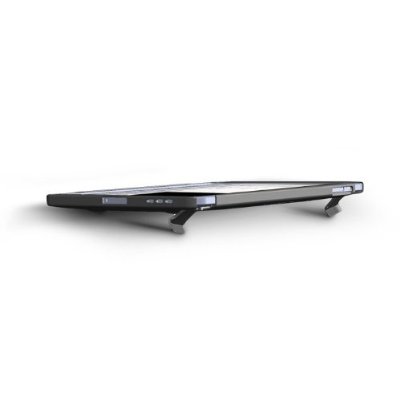
    While the back clip piece is getting applied, you can lock the clip into position to allow your iPod to grow to be your choice of a horizontal or vertical stand on a flat surface.

    The beauty and ease come from these marvelous interchangeable pieces so you change the back pieces of your case rather then moving your device from case to case. This function is only offered with the SportShell four-in-1.

    The bottom line is that you are no longer necessary to buy a number of distinctive situations for your iPod touch, the SportShell four-in-1 gives you a selection of options for the cost of just 1 case.

    All of this whilst giving you maximum protection for your iPod touch, no matter what selection you pick out. The rotating clip offers you full access to your iPod touch and its functions, in addition to the security you have to have.

    Saturday, 29 October 2011

    Maxoderm - How Does the Maxoderm Process Work?


    Introduction

    Maxoderm - (Natural Male Enhancement) Maxoderm is the ONLY sexual performance product of its type that is scientifically engineered with Vasotran Auctum, a patent pending formula that makes use of Transdermal Delivery. Maxoderm, engineered specifically for those concerned about male virility, was created to enhance sensation and the feeling of firmness. Also engineered particularly for those concerned about the size and really feel of their erections, Maxoderm contains the patent pending herbal blend, Vasotran Auctum.

    Enhancement - How It Works

    Initial Integration Phase: While you WILL start to really feel a distinction with your particularly initial use, in order to accomplish the greatest achievable results when on the MAXODERM Male Enhancement Technique, we recommend the following application frequency for the very first 12 weeks:

    * Week 1: 4 applications

    * Week 2-three: 5 applications per week

    * Week four-6: 6 applications per week

    * Week 7-8: 5 applications per week

    * Week 9-10: four applications per week

    * Week 11-12: 3 applications per week

    Whilst you're operating on healthier living overall, adding a male enhancement supplement can take you to an even better level of sexual efficiency and pleasure. Barmensen Labs, formulators of Maxoderm, the original topical male enhancement formula, presently has a patent pending for this revolutionary male enhancement system.

    Outcomes

    When can I expect to see results?

    Everyone's bodily make-up is diverse and results will differ. Then again, some clients have reported dramatic outcomes in as little as 4 weeks. Nonetheless, there is a smaller percentage of men who may possibly not achieve the results they desire. If you put it to superb use and correctly wear it you will get results.

    Topical

    Intensify Your Pleasure - Maxoderm's topical formula goes to work quickly increasing pleasure right away. This exclusive topical formulation improves erection good quality and firmness even though revitalizing the locations of the skin most involved in arousal and orgasm. This exclusive topical formulation makes use of targeted delivery to strengthen virility, excellent and firmness, when revitalizing the areas of the skin most involved in arousal.

    Conclusion

    Maxoderm is the only scientifically engineered topical lotion that is at the moment available without having a prescription. The Topical Maxoderm program is developed to quickly boost the power and size of your erections. Maxoderm and Connection are not intended for use by pregnant/nursing ladies trying to conceive. Maxoderm is also 100% natural 100% safe. Maxoderm is a natural option to prescription solutions to boost men's sexual efficiency.

    Patent Protection for a Product Ideas or Inventions